


What are Environmental Sensitivities?
Environmental Sensitivities (ES) describes a family of disorders in which people are more sensitive than average to environmental exposures such as light, sound, smell, taste, vibration and electromagnetic fields.
- Multiple Chemical Sensitivity (MCS) and Electrohypersensitivity (EHS) are two common examples.
- The cause of ES is uncertain.
- Causes may include a combination of pre-existing vulnerability, such as genetics, growing up in an adverse environment, having a more responsive central nervous system, and exposure to large amounts of sensory stimuli either in large dose/s or repeatedly over time.
- Neuroplasticity may play a role in ramping up symptoms over time and making it difficult to recover through avoidance of exposure alone.
- Reversing neuroplastic brain changes seems helpful in many.
Many professionals falsely attribute ES to emotional or psychiatric causes. This adds to the suffering of people with the condition.
ES is real and can be extremely disabling and isolating.
Online Courses
Self-Study Course
Healing Through Neuroplasticity
Learn to reduce or eliminate environmental sensitivity by rewiring your brain. Decreasing your sensitivity is possible. Neuroplasticity works!
More DetailsSelf-Study Course
Pathways to Improvement
Learn to take charge of your health to help you feel and live better. Find out what is making you sensitive and work to decrease external and internal stimuli. Self-management works!
More DetailsMembership to Live Sessions
Live! with Dr. Stein
Evidence-based presentations and Q&A with Dr. Stein. Credible, science-based and cutting edge information about how to live longer and healthier.
More DetailsWebinars (recordings)
Mast Cell Activation Syndrome (MCAS) and Complex Chronic Illness
Dr. Kelly McCann describes MCAS, its common symptoms, and why it is becoming more common. She explains how to connect root causes, such as mold, chronic infections, and dysautonomias, and recognize patterns of susceptibility.
More DetailsMaking the Invisible Visible: A Visual Guide to EMFs
Mitch Marchand, building biologist, explains the different types of human-made electromagnetic fields (EMFs) from wireless tech and electricity, the potential health effects and what you can do to reduce your exposure.
More DetailsVagus Nerve
Dr. Navaz Habib explains how the vagus nerve controls essential body functions like breathing and inflammation. He shares simple exercises to activate the vagus nerve and improve your health.
More DetailsCauses & Treatment
Dr. Neil Nathan explains how to solve underlying causes of ME, CFS, FM and ES. Learn strategies to recover from mold and infections that make people sensitive and reactive.
Books
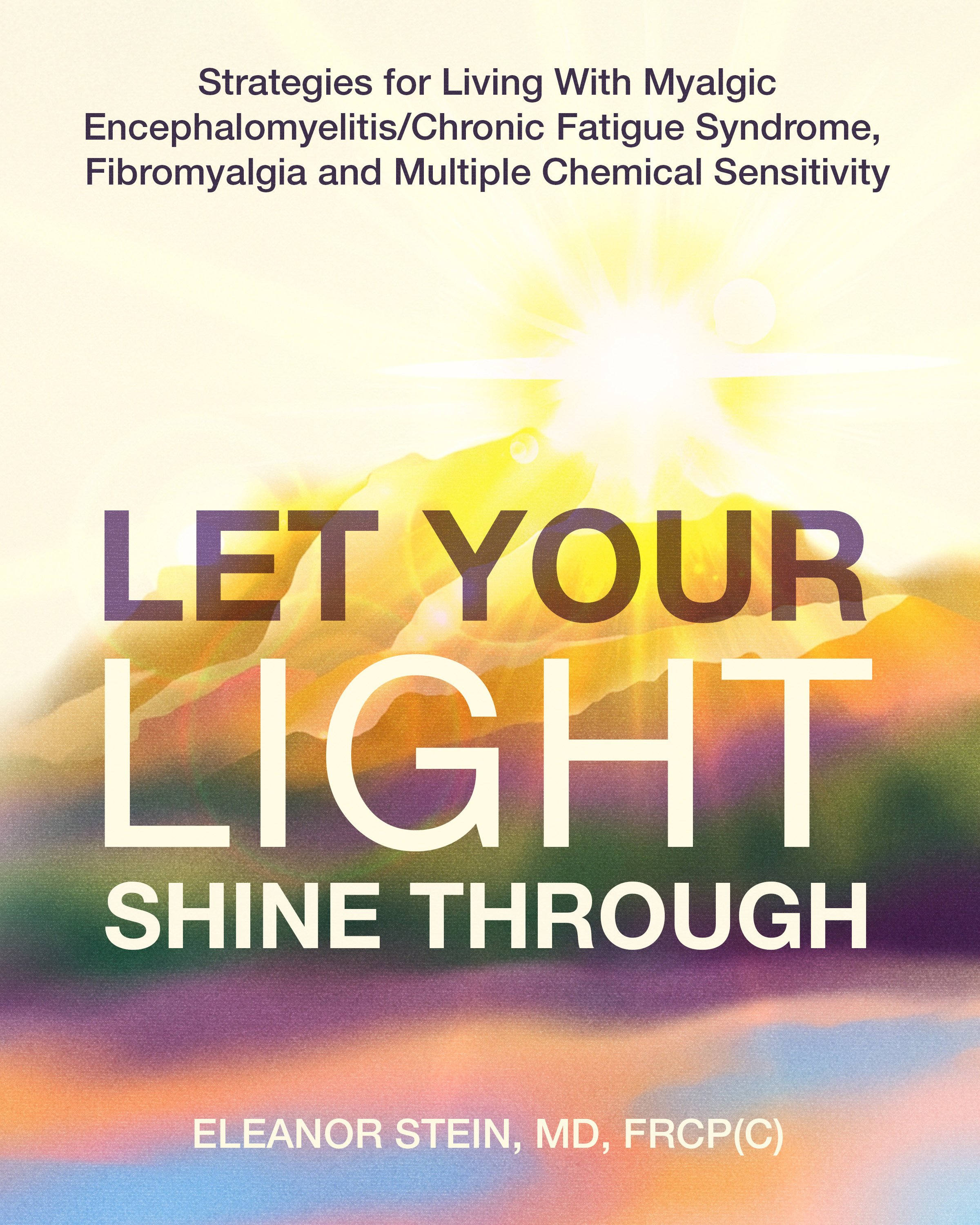
Let Your Light Shine Through, Second Edition
In this manual, Dr. Stein shares the strategies she has found to be the most successful for patients in her 35-year medical practice working with ME, CFS, FM, ES, chronic pain and long COVID. Readers are guided through a 286-page, 4-month program specific to these conditions. Let Your Light Shine Through is filled with practical, no-to-low-cost management suggestions, tools and resources.
The second edition has updated disease definitions, research updates, online resources, peer-reviewed references, and a bonus chapter, New and Future Directions, with new strategies to leverage the body's innate ability to heal.
Formats available: downloadable PDF, Amazon Kindle, Amazon paperback, Kobo eBook, and paperback from your local bookstore.
More DetailsThe Dr. Eleanor Stein Podcast
Episode 22: The Hidden Molecule Disrupting Your Mitochondria with guest Dr. Stephanie Seneff
These are the most current Podcasts on the topic of environmental sensitivities.
For all Podcasts, click here.
Recommended Free Videos
Neuroplasticity of the Brain Meetup
In this presentation, Dr. Stein gave a detailed summary of neuroplasticity, how it causes pain, how we can leverage it to heal from persistent pain, and the neuroplasticity boosters that allow practice to be more effective. The presentation is 45 minutes, followed by a very engaged Q&A session with the attendees.
 MCS and Anxiety: Dispelling the Myth, May 6
On May 6, Dr. Stein was a guest speaker for The ASEQ-EHAQ - L'Association pour la santé environnementale du Québec / Environmental Health Association of Québec as part of International Awareness Month. From her 20 years + experience as a psychiatrist treating patients with MCS, Dr. Stein explained why, although some people with MCS (as with any medical condition) can have mental health symptoms, MCS is not a psychiatric disorder. When patients with MCS are misdiagnosed as having a mental health disorder, their physical symptoms are dismissed, and they are offered incorrect treatment.
The content is published in text and audio on Dr. Stein's blog page.
Interview with the Environmental Health Association of Québec / L'Association pour la santé environnementale du Québec
- March 12, 2022
The National Institute of Public Health Québec (Institut national de santé publique du Québec – INSPQ) recently published a report on MCS concluding that anxiety and not chemical exposure is the cause of multiple chemical sensitivity (MCS). This a conclusion reached without consultation with people with lived experience, or experts in MCS.
The Chemical Sensitivity Podcast
Episode 8: MCS is Not an Anxiety Disorder with Dr. Eleanor Stein
Dr. Stein was featured as a guest speaker on this show hosted by Dr. Aaron Goodman, PhD. The Chemical Sensitivity Podcast is aired twice per month. Its purpose is to amplify the voices of people with MCS and to highlight the critical work that researchers and clinicians like Dr. Stein are doing to further the cause.

Blog Posts
6 Ways to Protect Yourself From Medical Gaslighting
Multiple Chemical Sensitivity and Anxiety: Dispelling the Myth
Risks of Wi-Fi Exposure During Prolonged Videoconferencing
Effects of 5G Wireless Communication on Human Health
These are the most current Blogs on the topic of environmental sensitivities.
For all Blogs, click here.
Free Downloads
Articles and Peer-Reviewed Publications
1999 International Consensus Definition for Multiple Chemical Sensitivity
Free Resources

Newsletter Signup
Sign up for news about ME, CFS, FM, ES, long COVID, and Chronic Pain.

Helpful Blogs
Access helpful articles about the specific needs of people with complex chronic diseases.

Educational Videos
Choose from a library of
Dr. Stein’s free videos.

Audio for Relaxation
Listen to or download meditations and audio files for reducing stress.

Publications and Presentations
Learn more from Dr. Stein’s
years of research, writing, and presentations.

Testimonials
Read what others have to say
about Dr. Stein’s offerings.

Other Online Resources
Access other online resources
that Dr. Stein recommends.

Other Practitioners
Find a practitioner who meets
Dr. Stein’s criteria for recommendation.
