A Breakthrough in Sleep Medication?
Oct 15, 2026
How Dual Orexin Receptor Antagonists (DORAs) work and my personal sleep journey
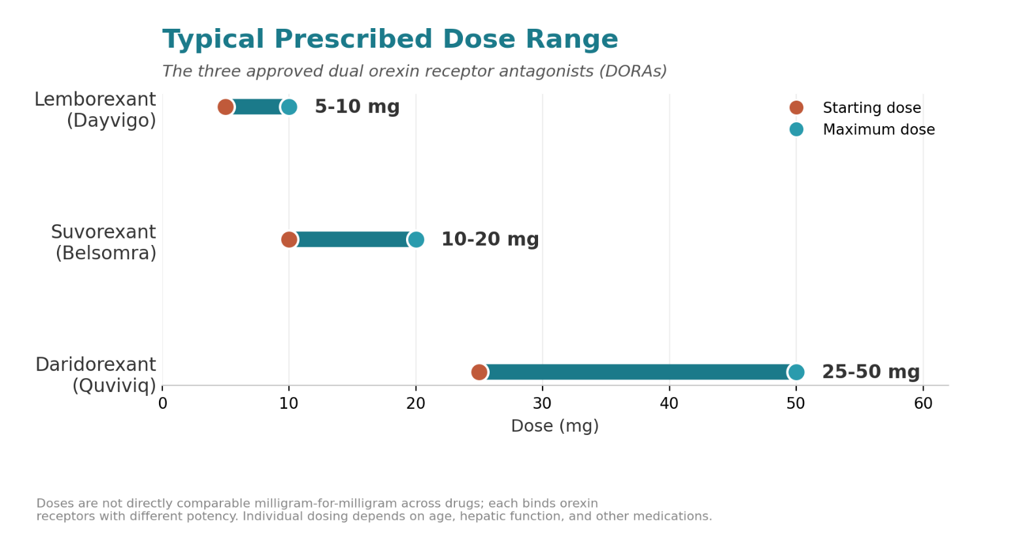
Over the past decade, a genuinely new class of sleep medication has become available: dual orexin receptor antagonists, known as DORAs. Three are currently approved in North America: suvorexant (Belsomra), lemborexant (Dayvigo), and daridorexant (Quviviq). Unlike the sedative-hypnotics that came before them, DORAs work by blocking the wakefulness signal in the brain rather than sedating the entire brain. I will start this blogpost with my own DORA journey and then get into what they are, how they work, and their effectiveness and side effects.
My Own Experience with the DORAs
I have had severe sleep problems since becoming ill in 1989. As is typical, first I had severe hypersomnia (oversleeping); I slept up to 20 hours/day and never felt refreshed. Over the period of a few years, hypersomnia turned into insomnia, and no matter how fatigued I was, I couldn't nap or sleep enough. For years I didn't start work before noon because I never knew if or when I would fall asleep each night.
I tried sleeping medications over the years, first low-dose doxepin and then zopiclone. Neither worked well or consistently, but they were better than nothing, and I tolerated them. Others like mirtazapine and trazodone were horrible. They didn't work and caused lots of side effects. A known problem with zopiclone and other Z-drugs is tolerance. I had to take a higher dose and then from time to time had to stop entirely for a few weeks to reset my system. This was never pleasant. And if I ever forgot to take the zopiclone or ran out, I didn't sleep at all. My daytime function was severely affected by how much sleep I got, and even after "good sleeps," I never felt rested or cognitively sharp.
I implemented all the strategies of CBTi that I teach and got some coaching with Daniel Erichsen's team. When I interviewed him on the Dr. Eleanor Stein Podcast (Episode 19), I resonated with his NATTO strategy. This stands for "non-attachment to the outcome." It works. I became able to take it in stride when I didn't sleep for days at a time, but eventually, I ran out of steam and went for an overnight sleep study. I found out that my sleep quality was extremely poor, that I was very easily aroused from sleep, resulting in virtually no deep or REM sleep at all. Yikes!

That is when my sleep physician suggested a DORA. I started lemborexant 5 mg, and it was like magic. I went to bed, took the tablet and within 20 minutes felt tired enough to turn off the light and go to sleep. But my most stubborn problem remained: waking in the early morning hours and not being able to get back to sleep. So, I used a half zopiclone when I woke up. Unfortunately, as before, I developed tolerance to it over time.
Then, my doctor suggested something surprising. He switched me to daridorexant 50 mg at bedtime and prescribed lemborexant 5 mg for the early morning wakeup. Wow! For the first time in decades, I am sleeping 7-8 hours most nights and feeling rested. I have no daytime sedation and no weird allergic/sensitivity reactions to the medication.
I have talked about DORAs in a previous blogpost and some of you in the community have tried them with mixed results. Some of you have told me they didn't work for you, but no one has reported severe side effects. We are all different, but it seems that this class of drugs offers some benefits compared with other classes of sleeping medication. Keep reading to learn more.
How Do DORAs Work?
The brain has a small population of cells in the hypothalamus that produce two chemical messengers called orexin-A and orexin-B (also known as hypocretins). These orexin neurons act like a wakefulness switch: when they are active, they keep the brain's arousal centers turned on. A DORA blocks the receptors these orexin messengers act on, effectively turning down the wakefulness signal at night so that sleep can occur.
This is fundamentally different from how the older "Z-drugs" (zolpidem, zopiclone, eszopiclone) and benzodiazepines (such as lorazepam or clonazepam) work. Those drugs act on a completely different system: they enhance gamma-aminobutyric acid (GABA), the brain's main general-purpose inhibitory chemical. Boosting GABA broadly dampens activity across much of the brain, which is an effective way to induce sleep, but it is a blunter instrument. A DORA is closer to removing the accelerator (wakefulness signaling); a Z-drug is closer to applying the brake everywhere at once.

Do DORAs Increase Deep Sleep?
Because they work through a narrower, more targeted mechanism, DORAs tend to leave the underlying structure of sleep more intact than GABA-based drugs do. In a controlled human study, suvorexant had no significant effect on the electrical spectrum of sleep in any frequency band during non-REM sleep, while zolpidem measurably altered it. Suvorexant's effect on the brain's electrical activity during sleep more closely resembled placebo (no drug) than zolpidem's did (Struyk et al., 2016). In this case, no change is good. We want to have a natural sleep, not an artificial one. DORAs also tend to preserve the normal proportion of time spent in deep sleep versus dream (REM) sleep, whereas Z-drugs and benzodiazepines suppress both.
This does not mean DORA-induced sleep is identical to unmedicated sleep in every respect. A 2026 analysis found that with regular use, lemborexant produced its own distinct changes, but it provides something closer to natural sleep than the Z-drugs (Sattari et al., 2026). Of course, going drug-free is always best. In my manual Let Your Light Shine Through and in my Pathways to Improvement course, I describe how to implement drug-free sleep strategies.
How Effective Are DORAs for Sleep?
Clinical trials for insomnia medications measure two main things using overnight sleep lab recordings (polysomnography): how long it takes to fall into persistent sleep (latency to persistent sleep, or LPS) and how many minutes a person is awake after initially falling asleep (wake after sleep onset, or WASO). Here is what the pivotal, placebo-controlled trials for each approved DORA actually found:
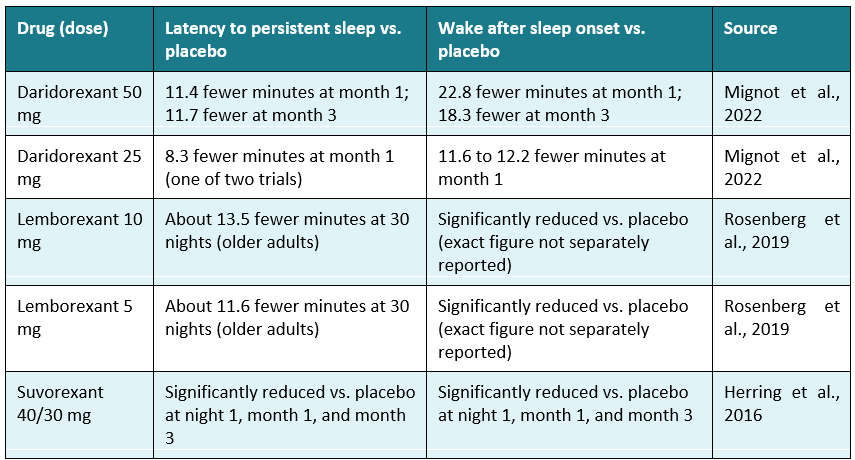
For self-reported total sleep time, daridorexant 50 mg increased it by about 22 minutes more than placebo at month 1. Taken on average, these are modest effects, not dramatic transformations. However, none of us is average. Some of us will have better results and some worse.
Safety and Side Effects
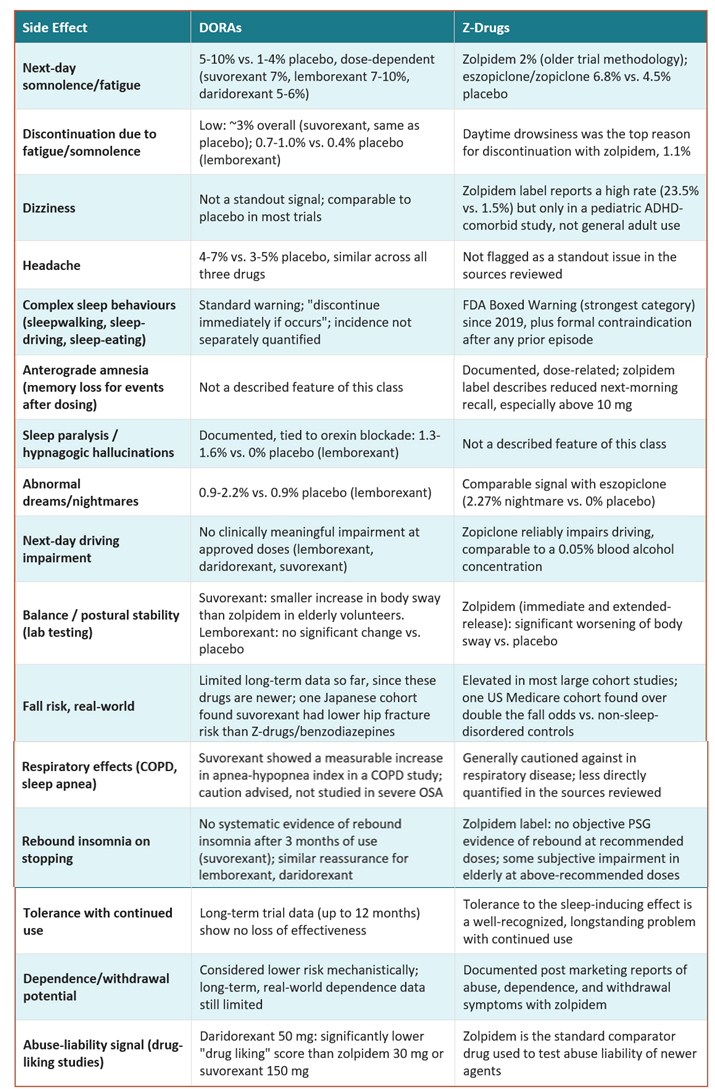
Are DORAs Better than Z-Drugs
Based on FDA prescribing information, pivotal trial data, and the comparative studies. Percentages are drug vs. placebo unless noted otherwise.
How to Use Them: Onset, Tolerance, and Stopping
How fast do they work?
DORAs are taken shortly before bedtime and are designed to act quickly; measurable improvement in sleep onset is generally seen from the first night of use in clinical trials, with daytime functioning benefits typically becoming noticeable within the first one to two weeks of consistent nightly use.
Does tolerance develop?
Long-term trial data (up to 12 months for lemborexant, and 12 months for daridorexant in extension studies) have not shown a loss of effectiveness over time. This is good news if true.
Are they hard to stop?
Across the pivotal trials, there was no systematic evidence of rebound insomnia or withdrawal symptoms when suvorexant was stopped after three months of nightly use, and similar reassuring discontinuation data have been reported for lemborexant and daridorexant. This is generally considered a safety advantage over benzodiazepines, which can produce pronounced rebound insomnia and withdrawal symptoms on discontinuation, particularly after prolonged use.
Want to Learn More?
I review all the commonly used classes of sleep medication in my manual Let Your Light Shine Through 2nd Edition.
Resources
Herring, W. J., et al. (2016). Suvorexant in patients with insomnia: Results from two 3-month randomized controlled clinical trials. Biological Psychiatry, 79(2), 136-148. https://doi.org/10.1016/j.biopsych.2014.10.003
Mignot, E., et al. (2022). Safety and efficacy of daridorexant in patients with insomnia disorder. Lancet Neurology, 21(2), 125-139. https://doi.org/10.1016/S1474-4422(21)00436-1
Rosenberg, R., et al. (2019). Comparison of lemborexant with placebo and zolpidem tartrate extended release for the treatment of older adults with insomnia disorder. JAMA Network Open, 2(12), e1918254. https://doi.org/10.1001/jamanetworkopen.2019.18254
Sattari, N., et al. (2026). Effects of lemborexant and zolpidem on sleep electroencephalography in older adults with insomnia: A randomized trial. Sleep Advances, 7(2), zpag017. https://doi.org/10.1093/sleepadvances/zpag017
Struyk, A., et al. (2016). Pharmacodynamic effects of suvorexant and zolpidem on EEG during sleep in healthy subjects. European Neuropsychopharmacology, 26(10), 1649-1656. https://doi.org/10.1016/j.euroneuro.2016.07.002
Click below for related blogs:
https://www.eleanorsteinmd.ca/blog/safe-effective-sleep-medication
https://www.eleanorsteinmd.ca/blog/risks-of-common-sleep-medications
 STAY CONNECTED AND INFORMED Join Ellie’s Newsletter to learn more about accessible science-based natural methods to help manage chronic illnesses. There is hope! And we’re here to help.
 If you are exhausted from trying to figure out which strategies to try next, join me live via zoom every two weeks. Live! with Dr. Stein takes the guess work out of healing, saves you time and provides the ongoing support and motivation you need to move ahead.
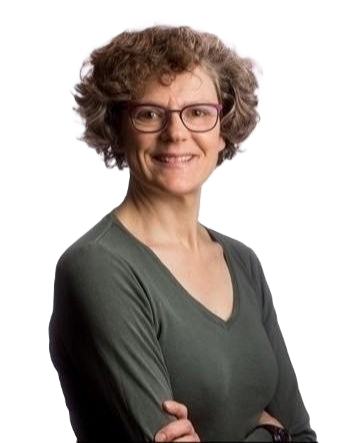 Dr. Eleanor Stein is a physician and psychiatrist who now dedicates her career to empowering people with complex chronic conditions—such as myalgic encephalomyelitis/chronic fatigue syndrome (ME/CFS), fibromyalgia, environmental sensitivities, long COVID and chronic pain—to reclaim their lives through accessible science-based self-management strategies.
She draws ideas from cutting edge research in circadian biology, neuroplasticity, hormesis and quantum biology among other.
With over 35 years of clinical practice in Calgary, Alberta, Canada, along with research and decades of lived experience navigating ME/CFS, fibromyalgia, and multiple chemical sensitivity (MCS), Dr. Stein uniquely blends rigorous medical insight with personal resilience. Her online resource platform offers, self-study programs, webinars, blogs and a podcast to support patients and health care professionals worldwide. If you are exhausted from trying to figure out which strategies to try next, join me live via zoom every two weeks. Live! with Dr. Stein takes the guess work out of healing, saves you time and provides the ongoing support and motivation you need to move ahead.
