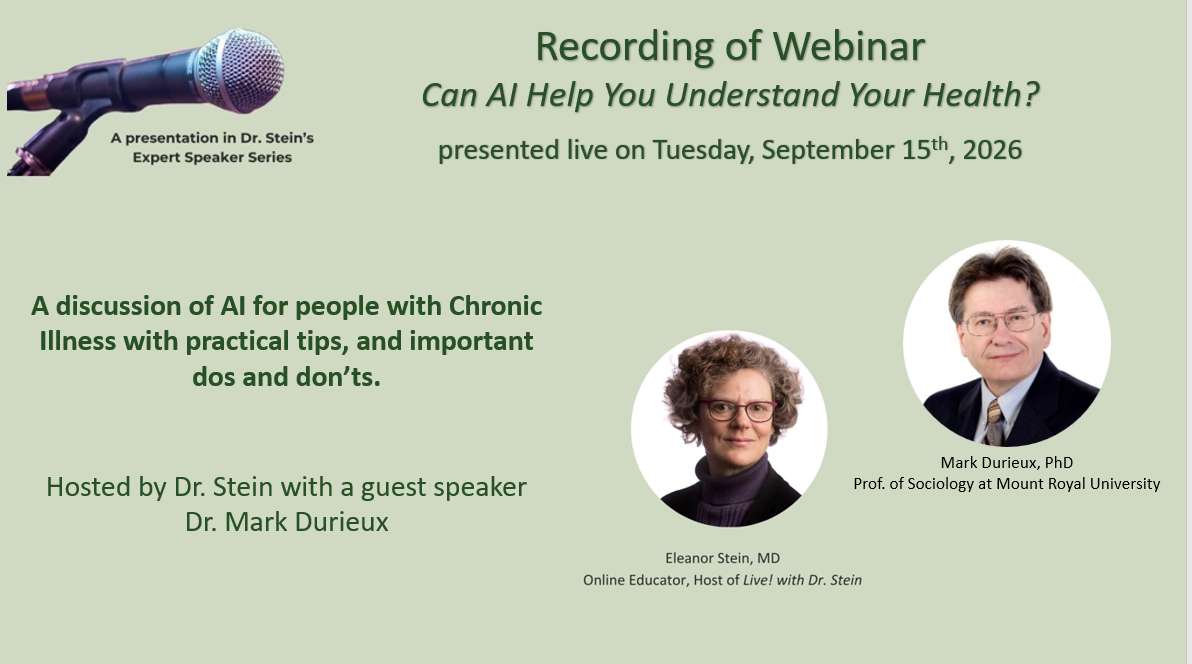

There was significant interest expressed by the attendees of the live event in a follow-up workshop in which Dr. Durieux can review the Health app using real situations, documents and questions from the attendees.
This will be an interactive workshop, not a presentation. It is an opportunity to ask your questions, see examples and to learn in real time how to do prompts and how to improve your questions.
Everyone registered to the webinar or who has purchased the recording is welcome to attend a FREE follow up on
Thursday, November 24, 2026 at 11:00 am Alberta Time (UTC-6).
AI helped him survive cancer, diabetes, and ketoacidosis. Here's how.
Somewhere between your last appointment and your next one, the questions pile up.
What did that test result actually mean?
Is the new research everyone's talking about relevant to your condition?
Why does one credible source contradict another?
For decades, the answer was "Dr. Google," and everyone knows how that goes: twenty tabs open, half of them alarming, none of them written for your situation.
Artificial intelligence has changed that landscape, and not in a small way. Used well, today's AI tools can help you translate medical language into plain English, organize your symptoms into a coherent picture, prepare sharper questions before an appointment, and make sense of the answers you receive afterward. Used poorly, they can mislead you with confident-sounding errors. The difference between those two outcomes isn't luck. It's skill, and skill can be taught.
That gap matters most for people living with fibromialgia, myalgic encephalomyelitis, chronic fatigue syndrome, long COVID and other complex chronic illnesses, where reliable information is scarce, medical encounters are short, and patients carry the burden of their own research. This isn't only a technology question. It's a question about who gets to understand their own health, and on what terms.
Dr. Mark Durieux brings an unusual combination of experience to this question. He's a sociologist at Mount Royal University in Calgary who studies how AI is reshaping how we learn, work and make decisions. He's also a patient. When Type 2 diabetes, cancer and ketoacidosis entered his own life, he put these tools to work in his own care and he's here to share what he learned: where AI genuinely helped, and where he had to be careful.
To be clear about the boundary: AI is not a substitute for qualified medical care, and Dr. Durieux won't pretend otherwise. What it can be, in trained hands, is a research and communication tool that helps you walk into your next appointment better informed and more confident.
In this recording, Dr. Durieux covered:
- What generative AI actually is, and how it's fundamentally different from a Google search
- How far these tools have advanced, including how physicians are already using them in acute care
- The most common misconceptions, and why they persist
- His own story: navigating diabetes, cancer, and ketoacidosis with AI as a research companion
- How to use AI well, and just as importantly, how not to, with sample prompts and a clear look at what can go wrong (bias, false information) and how to catch it
- The main AI platforms, and the real pros and cons of each
- How to get started, today, with no technical background
- New tools that can automatically pull your phone's health data into your AI system to build your health history
Dr. Durieux also demonstrated his AI Health app
titled Health, Wellness, Healing and Medicine.
The app is available for free for anyone registered.
The recording of this webinar is for you if:
- You want a more active role in your own healthcare
- You live with chronic illness and are tired of hitting walls when you look for answers
- You're curious about AI but unsure whether you can trust what it tells you
This recording is 93 minutes. Here's how it breaks down
- 15 min introduction and discussion of AI
- 32 min presentation by Dr. Durieux
- 11 min demonstration of the app
- 35 min live Q&A
 This presentation is part of Dr. Stein's Expert Speakers Series. These will be held approximately monthly, and each session will feature a different guest expert on topics of interest to people with complex chronic disease, chronic disease in general, and people interested in living healthier, longer.
ALL presentations in the Expert Speakers Series are FREE
with a membership to Live! with Dr. Stein.
About the Presenters
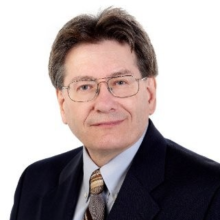
Mark Durieux, PhD
Sociologist and Educator
Dr. Durieux is a professor of Sociology at Mount Royal University in Calgary, Alberta, Canada. Dr. Durieux is developer of the All Walks Sociology ecosystem of generative-AI applications. He brings sustained hands-on experience using AI in post-secondary teaching, research, writing, course design, assessment development, and public-facing educational content. His AI work is grounded in a sociological concern with how these technologies are changing education, knowledge, creativity, inequality, and public discourse.
Mark is also the lead co-author of Social Entrepreneurship for Dummies and has written extensively on introductory, environmental, economic, urban, and public sociology, as well as research methods. He works with communities and organizations in Canada and abroad to advance social entrepreneurship, equity, and democratic engagement. His mission is to make sociological knowledge more accessible and to encourage critical, hopeful public conversations about social change. AI is one of the tools he employs with which to do this work.
Eleanor Stein, MD
Dr. Eleanor Stein brings a rare combination of over 35 years of lived experience and medical expertise in myalgic encephalomyelitis, chronic fatigue syndrome, fibromyalgia, environmental sensitivities, long COVID and chronic pain.
She became ill with ME, CFS, FM and MCS in 1989. Since then, she has experienced, studied, and treated the full alphabet of related conditions, including joint hypermobility, orthostatic dysfunction and mast cell activation syndrome. She has personally tried hundreds of approaches, attended hundreds of medical conferences, and reviewed thousands of peer-reviewed papers to determine what works best for the greatest number of people.
Since retiring from medical practice at the end of 2022, Dr. Stein has dedicated her time to integrating emerging research in neuroplasticity, hormesis, circadian biology, and related fields. While traveling in her camper van, she continues to study and translate this research into practical, accessible programs designed to make the healing journey easier, safer, and more effective.