
Why Shame Happens with Chronic Illness
May 20, 2026
Here are four ways shame quietly seeps into your thoughts:
Many people navigating life with a chronic illness carry a burden that’s rarely spoken of. It’s not the pain, the crushing fatigue, the gnawing uncertainty, or even the struggle to find good medical care.
It’s shame.
This feeling often arrives so subtly, you might not even recognize it at first. It can cleverly disguise itself as those self-critical thoughts you just assume are true. You know, the ones that whisper:
- “I really should be able to do more.”
- “Other people have it so much worse than me.”
- “I’m constantly letting everyone down.”
- “What on earth will they think of me now?”
Over time, this relentless inner critic can become one of the most agonizing aspects of living with an illness. And it doesn’t just mess with your feelings; it profoundly impacts how you connect with others, how you cope day-to-day, and even your capacity to heal.
Why Shame's Role in Chronic Illness Is So Crucial
Dr. Brené Brown stands out as one of the most respected researchers exploring shame and vulnerability. If you want to understand how these two are intertwined, her work is essential.

Her 2010 TED Talk, The Power of Vulnerability, has garnered over 77 million views—a clear sign that vulnerability and shame are incredibly common human experiences.
Dr. Brown defines shame as "the intensely painful feeling or experience of believing that we are flawed and therefore unworthy of love and belonging" (Brown, 2012). This definition hits particularly hard for those living with chronic illness. A chronic condition can fundamentally alter your identity, your physical abilities, and even how others perceive you. When these shifts occur, it’s all too easy to internalize the idea that you are somehow "less than".
Believing that we are somehow to blame for our illness piles on a tremendous amount of emotional pain. It makes us feel defective, adding another heavy layer to our suffering.
The Disconnection Cycle in Chronic Illness
So, how exactly does shame take root in someone with a chronic illness? When your body changes, your capabilities change right along with it. You might find yourself canceling plans more often. Your ability to work, or work in the same way, might diminish. You might even "look fine" on the outside, while feeling anything but on the inside.
As these changes accumulate, it’s easy to start believing things like:
- I’m simply not strong enough.
- I’m not reliable enough for others.
- I’m just not good enough, period.
And when we feel "not enough", our natural instinct is to withdraw.
We speak less. We share less of ourselves. We isolate.
This creates a vicious cycle of shame and secrecy. If we're too ashamed to talk openly about our experiences and don't let our true selves be seen, we effectively cut ourselves off from the very people who could support us. Connection, after all, is one of the most vital ingredients for emotional and physical resilience. This kind of disconnection weakens our ability to handle life’s challenges, which, paradoxically, can deepen those feelings of shame.
The Belief That Keeps People Trapped
Brené Brown’s research uncovered a powerful truth about people who experience love and belonging: they all share a fundamental belief that they are truly worthy of it (Brown, 2010). It’s not that these individuals are inherently healthier, more productive, or more successful than others. Instead, they simply believe they are enough, just as they are. This insight suggests that embracing your own worthiness can be a truly transformative force in your life.
Unfortunately, chronic illness can slowly erode this vital sense of self-worth. When your life no longer aligns with your own expectations, or society’s, it’s all too easy to feel less valuable, especially when you focus on what you can no longer do.
But here’s the thing: no one was ever meant to measure your worth by such narrow standards.
Why Vulnerability Feels So Hard with Chronic Illness
Brené Brown describes vulnerability as a potent mix of “uncertainty, risk, and emotional exposure” (Brown, 2012). For anyone living with a chronic illness, uncertainty isn't just an occasional visitor; it's a constant companion, every inute of every day. You might find yourself constantly wondering:
- How will I feel when I wake up tomorrow?
- Can I really commit to this plan, or will my body betray me?
- How will others react to my limitations or my needs?
Given this relentless uncertainty, it’s perfectly understandable to want to put up walls and protect yourself.
These protection strategies, while offering a quick fix for discomfort, often backfire in the long run. They can actually worsen symptoms and deepen the sense of isolation from others.
Yet, there's good news: vulnerability isn’t just about fear and shame. It’s a double-edged sword, yes, but it’s also the very wellspring of joy, love, creativity, and true belonging (Brown, 2010). We might feel safer by avoiding vulnerability, by keeping our true selves hidden. But in doing so, we often end up more alone—and paradoxically, even more exposed to the pain of disconnection.
Common “Shame Shields” in Chronic Illness

We all have an innate drive to protect ourselves from shame, often without even realizing it. These protective patterns are deeply ingrained behaviors we pick up over time. In her insightful 2012 book, Daring Greatly, Brené Brown shines a light on some common, yet ultimately unhelpful, ways we try to fend off shame. She calls them "Shame Shields". As you read through them, take a moment to consider if any of these resonate with your own experiences. If you spot some familiar patterns in your thoughts or actions, there's a worksheet available to help you start shifting toward a more empowered mindset.
1. Perfectionism
You might find yourself striving to do everything "just right". This could mean:
- Following the perfect diet
- Adhering to the perfect treatment plan
- Maintaining perfect pacing
Contrary to what many believe, perfectionism isn't actually about achieving excellence. Instead, it's a desperate attempt to avoid criticism and, ultimately, shame. The truth is, perfection is an impossible target, and this relentless chase often leaves us feeling utterly exhausted and riddled with self-blame. If you have a disease with post-exertional malaise as a core symptom, perfectionism is a recipe for recurrent crashes.
2. Numbing
When emotions become simply too much to bear, it';s natural for people to try and dull them down. Common ways we might try to numb ourselves include:
- Keeping constantly busy, never pausing
- Binge-watching shows or endlessly scrolling through feeds
- Overeating
- Compulsive shopping
As Brown wisely points out, "you cannot selectively numb emotion" (Brown, 2010). Trying to shut down feelings you don't want to experience will inevitably dim the ones you cherish, like happiness and peace, too. It's like trying to turn off only the sad songs on the radio without affecting the joyful ones; it just doesn't work that way.
3. Foreboding Joy
This particular shield pops up a lot, especially when dealing with chronic illness. You start to feel a little better, a flicker of hope appears — and immediately, your mind jumps to:
- "This won't last."
- "Something bad is definitely going to happen."
Brown aptly labels this "foreboding joy." It's essentially anticipating loss as a way to brace yourself against future disappointment (Brown, 2012). While you might believe that hedging your bets will somehow prevent pain, this strategy often keeps you from fully savoring positive
moments when they actually arrive.
4. Silence and Isolation
Shame thrives in the shadows. The less we talk about it, the more powerful it becomes (Brown, 2012). Many people living with chronic illnesses hesitate to share their experiences because they're afraid of:
- Being misunderstood
- Facing judgment
- Being seen as a burden
But this silence only deepens isolation, and isolation, in turn, fuels shame and vulnerability, creating a vicious cycle.
How to Truly Help Reduce Shame in Chronic Illness
One of Brené Brown's most impactful messages is that shame and vulnerability aren't unique to a few; they're universal human experiences. We all grapple with them. Some individuals seem to bounce back more easily, handling tough feelings with greater resilience. Often, this hinges on whether they can recognize what';s happening and if they have the right tools to navigate those emotions when they surface.
Feeling shame or vulnerability isn't a sign of weakness or a personal failing. It simply means you're human. So, when shame or vulnerability shows up, how can you respond in ways that are more effective than the "shame shields" we just discussed? Here are a couple of powerful tools from Brown's book Daring Greatly to get you started. In my next blog post, I'll dive deeper into the
best ways to truly protect ourselves from shame and build resilience against it.
Empathy
Empathy stands out as one of the most potent ways to diminish shame (Brown, 2012). Sometimes, all it takes is hearing "me too" to realize you're not walking this path alone.
Self-Compassion
How you speak to and treat yourself makes a world of difference.
Self-compassion involves:
- Talking to yourself with the same kindness you'd offer a good friend
- Acknowledging that struggle is an inherent part of the human experience
- Avoiding getting completely wrapped up in negative thoughts
Instead of thinking or saying, "I'm failing,; you might try, 'This is incredibly hard right now, and I'm doing my absolute best".
The Mindful Self-Compassion Workbook by Kristin Neff and Christopher Germer is packed with information and practical exercises to help you cultivate this vital skill. If you're eager to explore even further, check out Dr. Neff's website, where you'll find a wealth of resources on self-compassion.
Shame can emerge as a quiet but formidable consequence of living with chronic illness. It manifests as harsh self-criticism, a pull toward isolation, and the gnawing belief that you are "not enough". To protect yourself, you might strive for perfection, hide difficult emotions, or simply stay silent. Yet, these very choices often leave you feeling even more isolated. The path forward demands the courage to cultivate empathy, self-compassion, and genuine, safe connection.
Remember, feeling shame doesn't mean you're failing; it means you're human. The good news is, there are real, tangible tools available to help you build resilience against shame and vulnerability.
Keep an eye out for my next blog post, where I'll share even more tools to help you manage shame effectively.
References
Brown, B. (2010). The power of vulnerability [Video]. TEDxHouston.
https://www.ted.com/talks/brene_brown_the_power_of_vulnerability
Brown, B. (2012). Listening to shame [Video]. TED.
https://www.ted.com/talks/brene_brown_listening_to_shame
Brown, B. (2012). Daring greatly: How the courage to be vulnerable transforms the way we live, love, parent, and lead. Gotham Books. https://brenebrown.com/book/daring-greatly/
If this blog post has been helpful to you, please let me know by emailing me at
espc@eleanorsteinmd.ca
For more information on medication management, see these blogs:
https://www.eleanorsteinmd.ca/blog/medical-gaslighting
https://www.eleanorsteinmd.ca/blog/living-well
https://www.eleanorsteinmd.ca/blog/how-to-cope
https://www.eleanorsteinmd.ca/blog/acceptance
If practical topics like this interest you, please join my Live! with Dr. Stein community. Learn from the live Zoom calls, ask your questions and make your request for topics for me to research and share.
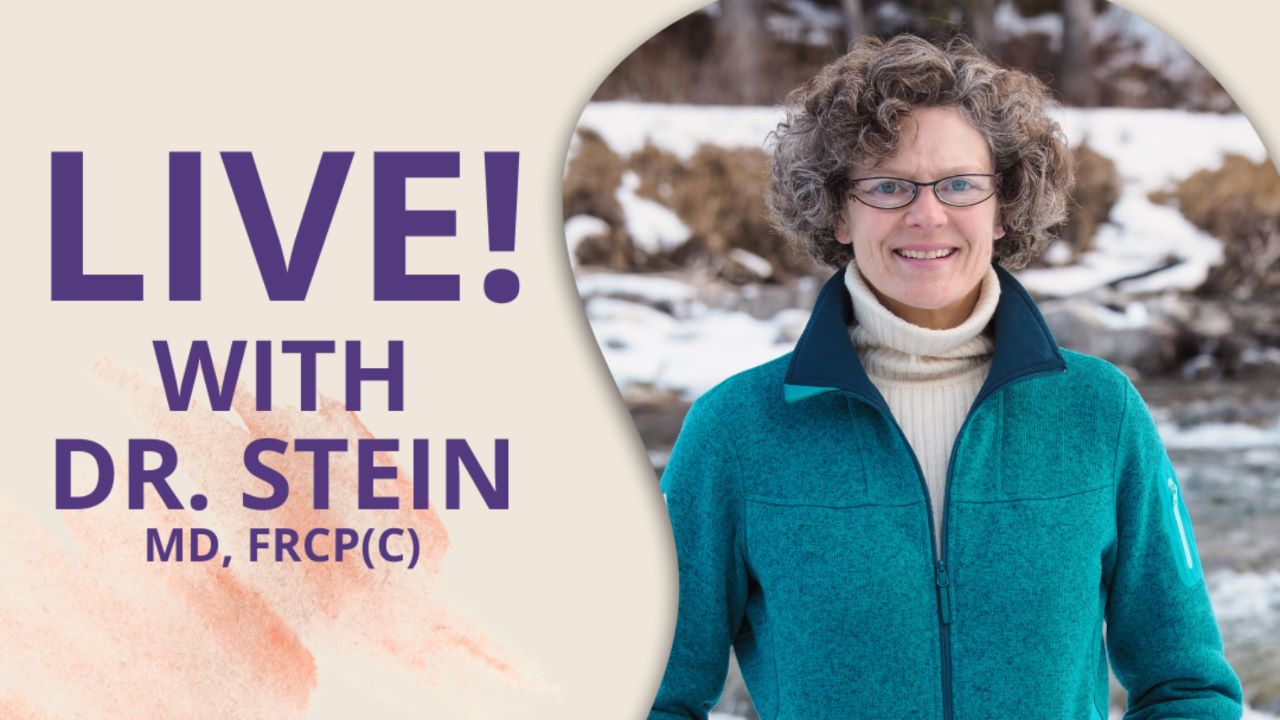
If you are exhausted from trying to figure out which strategies to try next, join me live via zoom every two weeks. Live! with Dr. Stein takes the guess work out of healing, saves you time and provides the ongoing support and motivation you need to move ahead.
 Dr. Eleanor Stein is a physician and psychiatrist who now dedicates her career to empowering people with complex chronic conditions—such as myalgic encephalomyelitis/chronic fatigue syndrome (ME/CFS), fibromyalgia, environmental sensitivities, long COVID and chronic pain—to reclaim their lives through accessible science-based self-management strategies.
She draws ideas from cutting edge research in circadian biology, neuroplasticity, hormesis and quantum biology among other.
With over 35 years of clinical practice in Calgary, Alberta, Canada, along with research and decades of lived experience navigating ME/CFS, fibromyalgia, and multiple chemical sensitivity (MCS), Dr. Stein uniquely blends rigorous medical insight with personal resilience.
Join Ellie’s Newsletter to learn more about accessible science-based natural methods to help manage chronic illnesses. There is hope! And we’re here to help.
